
By Roxie Francis, Founder of I Heart My Voice
Your child just finished a great lesson. Then the week happens.
Homework, soccer, dinner, a mysterious lost shoe. Somewhere in there, singing practice gets squeezed out. Sound familiar?
Good news. Practice at home does not have to be long, loud, or perfect. It has to be regular and fun. I have coached kids and teens for more than 20 years, and I will show you exactly how to make it happen without nagging.
The Short Answer: How Do You Practice Singing at Home?
To practice singing at home, warm up gently for five minutes, work on one or two songs or skills for ten to twenty minutes, and finish with something fun, most days of the week. Short, regular sessions build a stronger voice than one long session on the weekend. Keep the volume comfortable, keep the water nearby, and let your child lead.
Here is the quick version:
✔️ Practice a little every day. ✔️ Start with a gentle warmup. ✔️ Focus on one or two goals per session. ✔️ Record on a phone and listen back. ✔️ End on a song they love. ✔️ Stop if anything hurts.
The rest of this guide shows you how.

Why Practice at Home Matters So Much
A weekly lesson is where your child learns. Home practice is where the learning sticks.
Think of it like a language class. Nobody becomes fluent by showing up once a week and staying silent in between. Singing works the same way. The muscles that control the voice learn through small, repeated habits.
The students who grow fastest are not the ones who practice the longest. They are the ones who practice the most often.

How Long Should a Child Practice Singing?
Here is a simple guide. Every kid is different, so treat these as starting points.
Ages 6 to 8: 10 to 15 minutes, a few days a week
Ages 9 to 12: 15 to 20 minutes, most days
Ages 13 to 18: 20 to 30 minutes, most days
If your child gets tired or cranky, stop early. A happy ten minutes beats a miserable thirty.

Set Up a Singing Spot
You do not need a studio. You need a spot.
Pick a place that is easy, quiet enough, and always the same. A corner of the living room works. So does a bedroom, a garage, or the bathroom with great echo.
Keep these things nearby:
A water bottle. Sipping keeps the voice happy.
A phone or tablet to record and play back.
A lyric sheet or the song on a music stand or screen.
A mirror, if your child likes to watch their posture and expression.
Make the space theirs. When a spot feels special, practice feels like a treat.
The Five-Minute Warmup
Every session starts here. A warmup wakes up the voice and protects it, just like stretching before a run.
Try this order:
Breathe. Breathe in through the nose for four counts and out slowly on a soft "sss" for six counts. Do this four times.
Hum. Hum a gentle tune on a comfortable pitch. Feel the buzz around the lips.
Lip trills. Blow air through relaxed lips, like a motorboat, and glide up and down.
Sirens. Say "woo" and slide from low to high and back, like a siren. Keep it easy.
Easy scales. Sing "ma ma ma" on five notes up and down, nice and light.
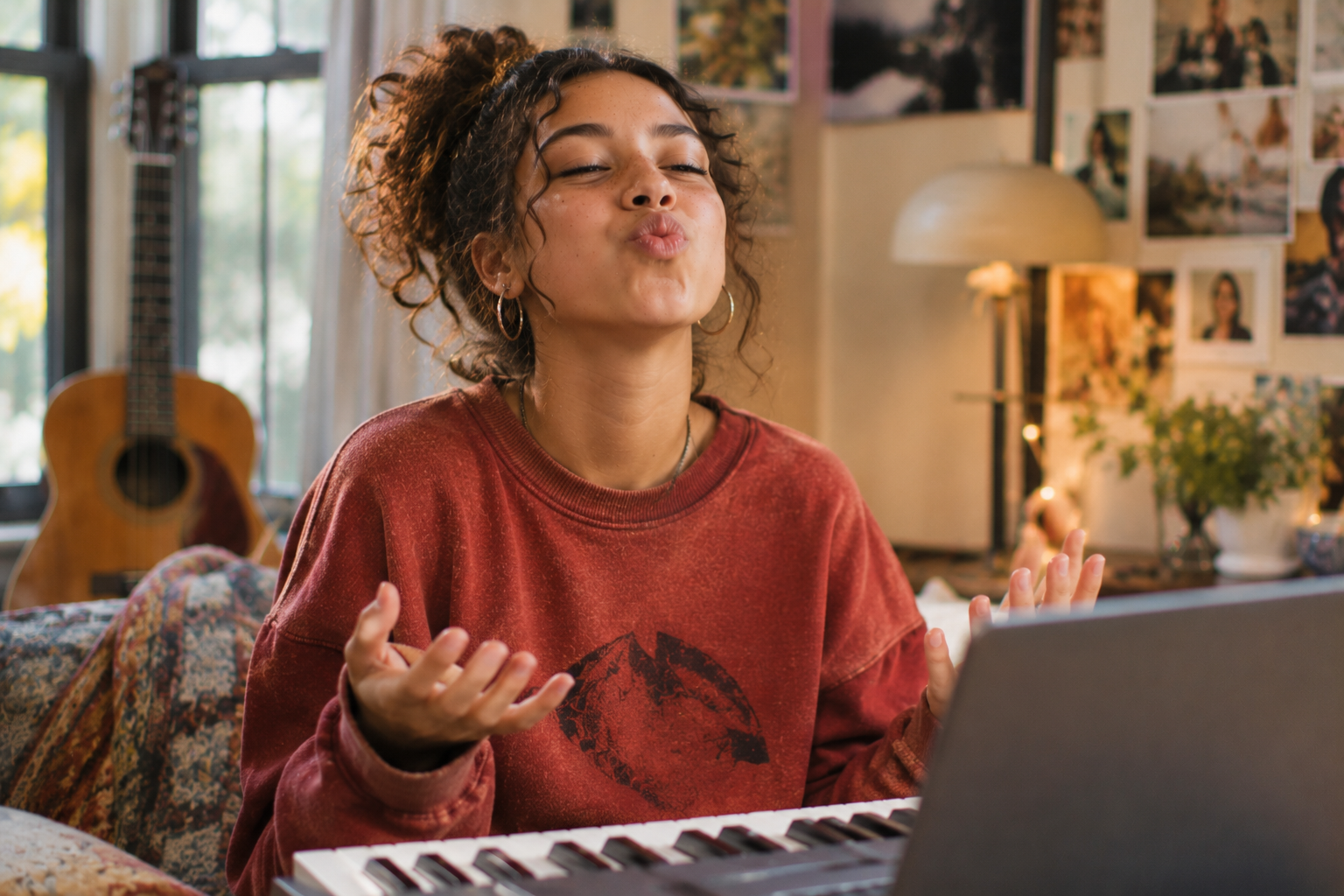
Kids love silly sounds. Let them make a motorboat. Let them be a fire truck. Silly warms up the voice and the mood at the same time.
What to Practice After the Warmup
Pick one or two things per session. Here are good choices.
Songs. Work on one section at a time. Sing it slowly, then at full speed.
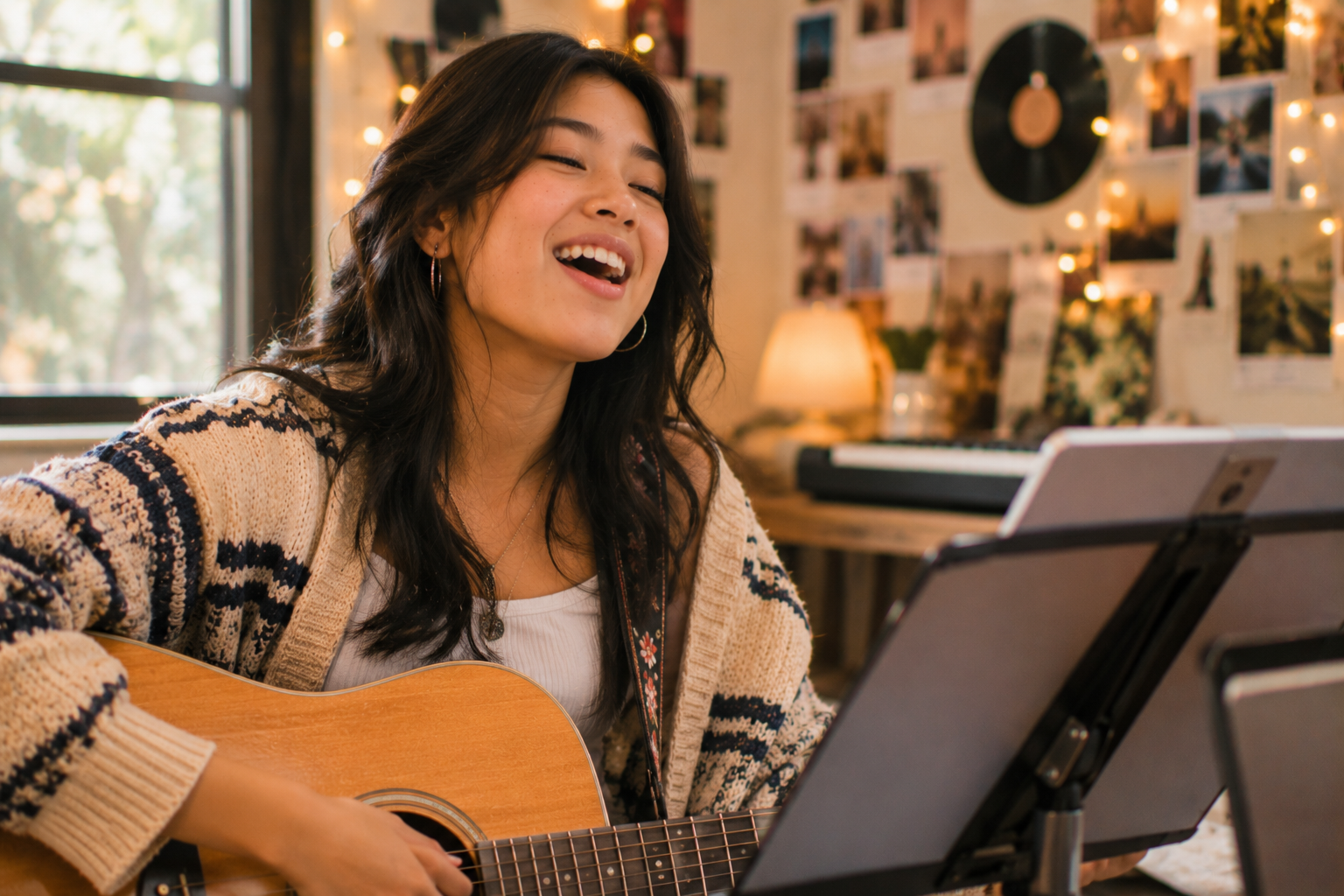
Pitch. Sing a note on the piano, a keyboard app, or a tuner. Then match it.
Breath. Practice singing a long phrase on one breath.
Lyrics and story. Speak the words out loud like a conversation. Then sing them the same way.
Stage skills. Sing in front of a mirror or the family. Practice a smile, a bow, and a confident start.
If your child has an online coach, ask what to practice that week. A good coach hands out clear assignments, and that takes the guessing out of it.
A Simple Weekly Practice Plan
Here is a sample week that fits a busy family.
Monday: Warmup, then work on the song's trickiest line.
Tuesday: Warmup, then pitch games.
Wednesday: Warmup, then lyrics and storytelling.
Thursday: Warmup, then breath and long notes.
Friday: Warmup, then sing the whole song start to finish.
Saturday: Free choice. Sing anything for fun.
Sunday: Rest.
Rest days matter. The voice is a muscle, and muscles grow when they recover.

Real Singers Who Practiced With Purpose
Here is what happens when kids and families stay consistent.
When Jiwon Lee began lessons at 8 years old, her family had no idea where it would lead. Her parent shared, "Over just two years, she grew immensely, developing a strong and confident singing voice that earned her callbacks for Broadway National Tours and even a Disney lead role as Sophie in Vampirina." That kind of growth comes from steady work week after week.
We coached Victoria Justice for more than five years. We recorded the right songs for her real voice, and those demos helped land her lead role on Nickelodeon's Victorious. Five years of showing up is a lot of Tuesdays.
Jasmine Villegas began working with us as a kid. She had drive, and we worked long nights recording songs and rehearsing for showcases. That dedication helped lead to a major label deal and a #1 Billboard hit.
Leanne Tessa of the Disney Mickey Mouse Club said it best: "I've never felt this confident singing on stage. I've seen so much improvement."
None of them practiced for hours a day as kids. They practiced often, with guidance, and with joy.

Make Practice Fun, Not a Fight
Here is where parents have the most power. A little fun goes a long way.
Turn it into a game. Can they hit the note three times in a row? High five.
Let them pick the songs. A kid who loves the song will practice it.
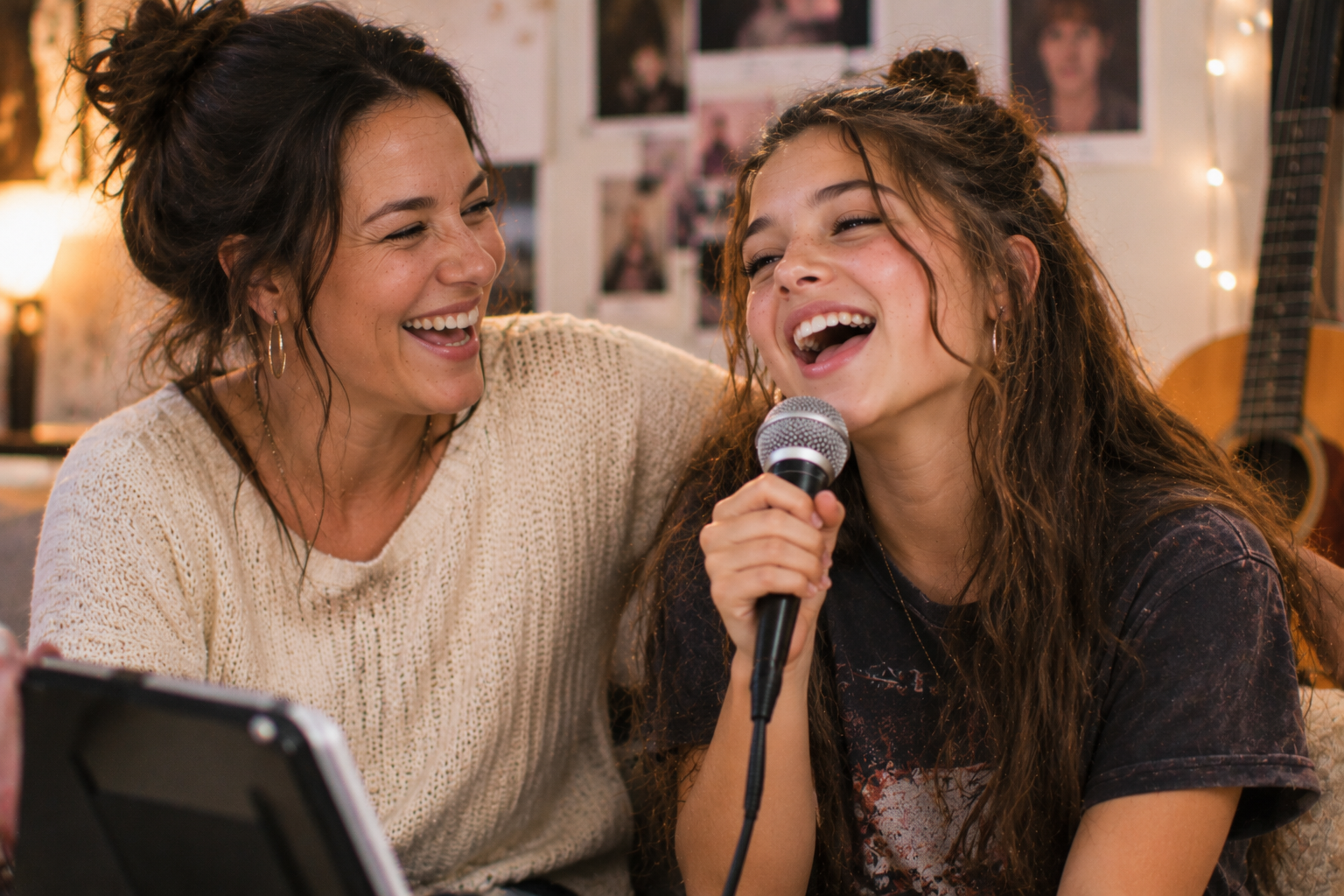
Sing together. Duets with a parent make everybody giggle.
Use a reward chart. Stickers work on teens, too, if you call it a streak.
Hold a mini concert. Friday night family show, anyone?
Keep it positive. Say what sounded great before you mention anything else.
If practice turns into a daily argument, take a break and bring the joy back first. Singing should feel good.
Record, Listen, Repeat
Your phone is the best practice tool you own.
Record a short clip at the start of the week. Record another at the end. Then watch and listen together.
Kids are often shocked by how much they improve in seven days. Seeing it on screen is better than any pep talk. It also helps them hear their own pitch, timing, and words, which builds self-awareness.
Keep the clips in a folder. In a few months, you will have a wonderful record of their progress.
What Not to Do at Home
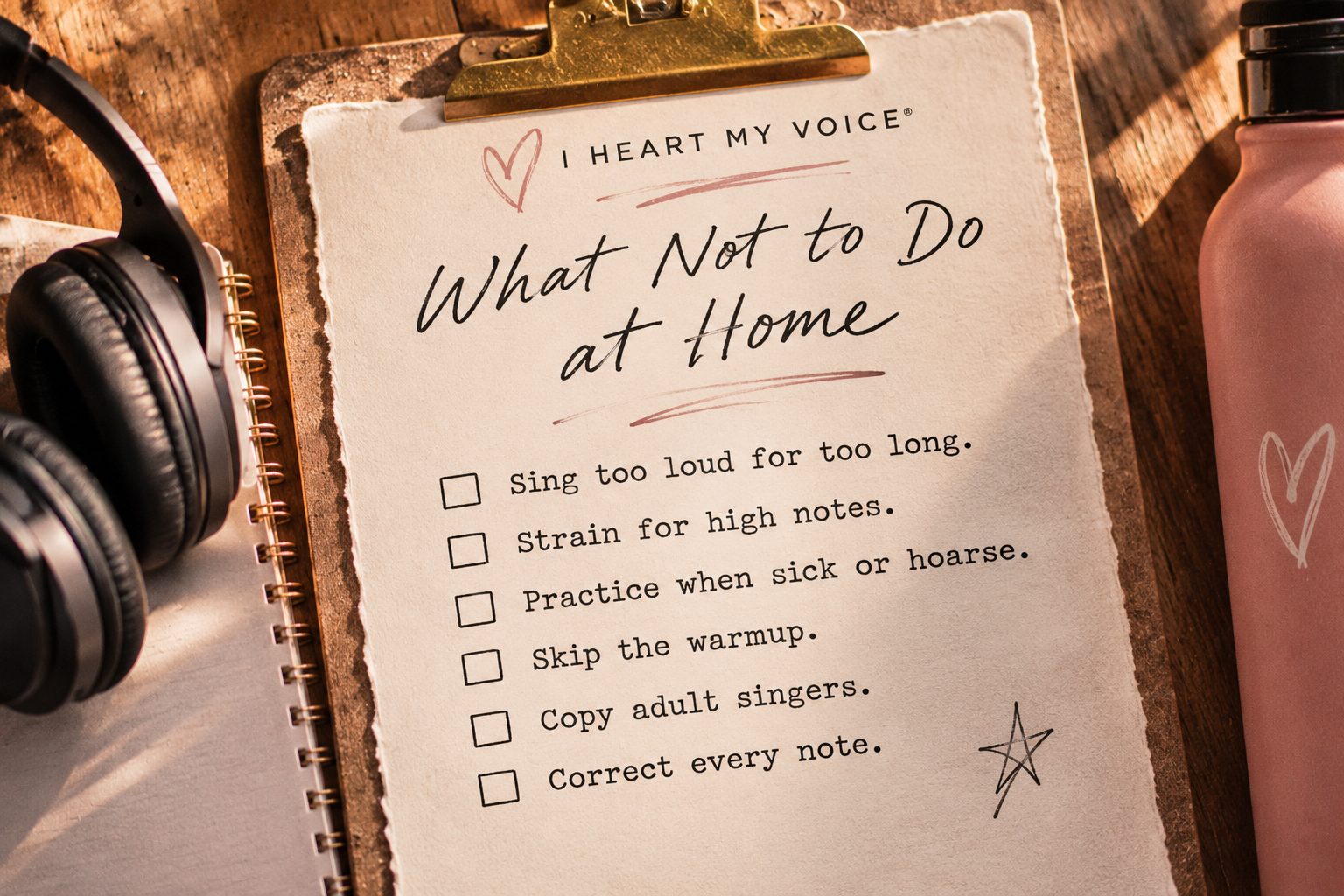
A few habits can cause trouble. Watch for these.
✖️ Singing too loud for too long. Loud is tiring and risky for young voices. ✖️ Straining for high notes. If the neck tightens or it hurts, stop. ✖️ Practicing when sick or hoarse. A tired voice needs rest. ✖️ Skipping the warmup. It is the easiest way to protect the voice. ✖️ Copying adult singers. Kids' voices are still growing, so choose songs that fit. ✖️ Correcting every note. Too much criticism kills the fun fast.
I am a vocal coach, and not a medical professional. If your child has pain or hoarseness that lasts more than two weeks, check with a doctor.
How a Coach Makes Home Practice Easier
You do not have to be a musician to help your child. You just have to be a cheerleader. A coach handles the rest.
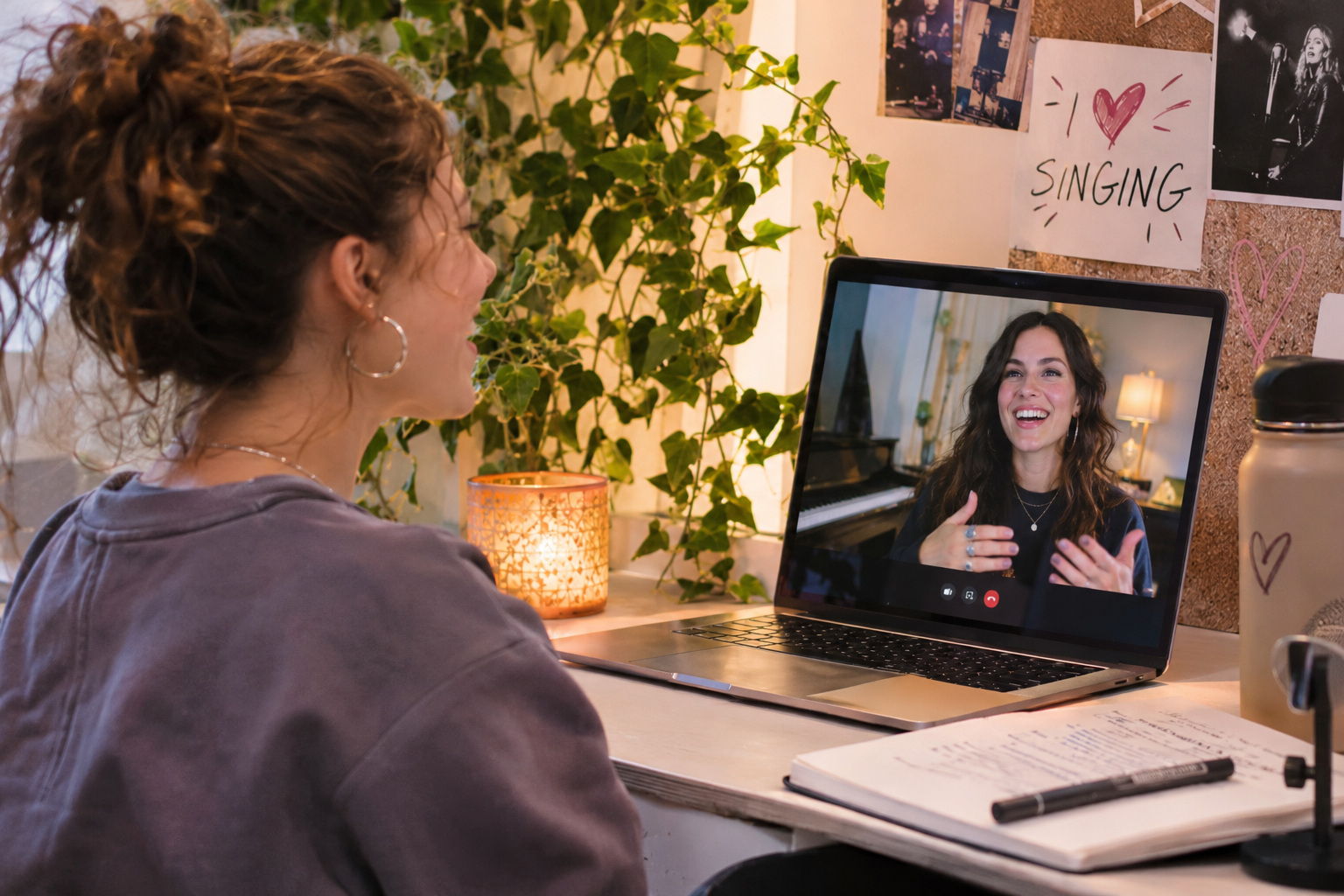
In our I Heart Singing program, students get weekly private online lessons with a dedicated award-winning vocal coach. They also get the IHMV Singers Portal, with assignments, warmups, and training videos, so your child always knows what to practice. There are quarterly performance showcases, too, which give kids a real reason to work toward a goal.
➡️ See how it works in our✨ I Heart Singing program for kids and teens.✨
Tips for Shy Singers
Some kids clam up when they know a parent is listening. That is normal.
Try these ideas:
Give them privacy. Let them practice with the door closed.
Start with humming. It is quiet and low pressure.
Sing along with a favorite track. It feels less exposed than a solo.
Share only when they want to. Never push a surprise performance.
Celebrate effort. Praise the practice, not just the sound.
Confidence grows one safe step at a time.
What About Teens?
Teens need a little more independence. Hand over the plan, and let them run it.
Ask what they want to work on. Offer to be an audience, and stay out of the way when they say no. If their voice is changing, keep songs in a comfortable range and keep practice gentle.
Teens also love goals. A new song for a showcase, an audition, or a video post gives them a reason to practice.

FAQs:
-
Warm up gently for about five minutes, then work on one or two songs or skills for ten to twenty minutes. Practice most days of the week, keep the volume comfortable, and end on a song your child loves. Short, regular sessions work better than one long session.
-
Ages 6 to 8 do well with 10 to 15 minutes, ages 9 to 12 with 15 to 20 minutes, and teens with 20 to 30 minutes. Stop early if your child is tired or the voice feels strained.
-
Try easy breathing, humming, lip trills, gentle sirens, and light scales like "ma ma ma." Silly sounds like a motorboat or fire truck make warming up fun and relaxed.
-
You do not need to be a singer. Set up a quiet spot, ask what they are working on, and listen with a positive attitude. A vocal coach can give clear weekly assignments, so you can simply cheer them on.
-
Keep sessions short, let them pick songs, and turn practice into a game. Use a streak chart or a Friday family concert for motivation. If practice becomes a daily battle, take a break and bring the fun back first.
-
Most kids do best with practice on most days of the week and at least one rest day. Short daily sessions build habits faster than long, rare ones.
-
No. A tired, sore, or hoarse voice needs rest. If hoarseness or pain lasts more than two weeks, talk to a doctor.
-
Yes. A coach gives your child clear goals each week, so practice has a purpose. At I Heart My Voice, students also get a Singers Portal with assignments, warmups, and training videos to use between lessons.
-
Record a short clip at the start of the week and another at the end. Listening to both together shows pitch, confidence, and clarity, and kids love hearing their own progress.
❤️ Final Word from Roxie
Help Your Child Practice With Confidence
Home practice does not have to be stressful. With a small routine, a fun attitude, and a coach in your corner, your child can grow faster than you think.
If your child or teen dreams of singing, whether for fun, confidence, or a future career, our coaches will guide every step.
➡️ Learn more about the ✨ I Heart Singing program for kids and teens.✨
With love,
Roxie

At I Heart My Voice, we help singers unlock their full potential through online singing lessons, vocal coaching, and artist development programs.
Whether you’re just starting out or ready to go pro, our award-winning team has guided singers to Broadway, Disney, Nickelodeon, major labels, and viral success.